Two experienced hosts share their best tips: How to be a good cabin host

There are both practical and personal elements at play when it comes to being a cabin host – and it can be invaluable to hear other hosts' experiences with both. Here, two experienced Landfolk hosts share their 20 best tips on everything from cleaning, bedding, and non-ticking clocks, to communication that leads to happy guests and an easy cabin trip.
Would you rather listen to the episode? Listen to the episode with Mette Hassinggaard and Pernille Sørensen from our podcast Sommerhusliv here or wherever you listen to podcasts.
“One of the things that can challenge me a bit is actually keeping service, hospitality, and hosting separate. What is what, exactly? And how can the three complement each other? I also know that the concept of hosting is new to many. What does it really mean to be a good host?” asks our host, Cathrine K. Reimann, in the latest episode of Landfolk’s podcast Sommerhusliv, which is about hosting and the role of a cabin host.
And one of the things that may have contributed to making the concept of hosting a bit hazy is perhaps that there has been a change in our society.
In recent decades, the idea of hosting has taken on a new form. In a 2011 analysis, Marie Bøttcher Christensen and Mads Daugbjerg from Aarhus University describe how the concept has changed as the service economy has been replaced by the experience economy. Today, it is therefore about something more personal, in contrast to the formal, because today we associate hosting with the good experience, and not just service.
Good hosting is therefore described to a greater extent as something that can build on good service. It is the idea that the basics, such as cleaning, clean bedding, and things that work as they should – do not stand alone, but are fulfilled first. After this, as a host, one can “take the next step towards authentic, personal hosting,” explain the two authors.


The analysis, conducted at Aarhus University, therefore defines 'hosting' as the relationship that arises between guest and host – regardless of whether the relationship is face-to-face, or concerns the bond of trust that is created, even if one may never meet directly. They also go a step further and write that the guest's expectations – “both those that are broken and those that are exceeded – are crucial for the experience of good hosting.” Therefore, good hosting, according to the two authors of the analysis, is largely about expectations.
It might sound demanding, but Landfolk’s Cathrine K. Reimann emphasizes that you don’t need to use the same recipe for hosting in all situations. Instead, hosting can actually be something that develops over time:
“If we talk about these three different definitions – service, hospitality, and hosting, then I am just naturally a hospitable person. I like to do things to make people feel welcome, so it’s something that feels natural to me. And there has definitely been a service element that has been one hundred percent my focus in the beginning, where it was about my cabin being clean and completely ready for guests when they arrive. And that was almost what I cared about most in the beginning. But as soon as I felt I had nailed that element and figured out how things should be, I could start to carefully build the hosting as well. My go-to is to have some flour mix and yeast ready for guests in the cabin, so they can bake rolls in the morning if they feel like it.”
And the matter of expectations is actually also something that the two experienced hosts, Mette Hassinggaard and Pernille Sørensen, whom we spoke with, emphasize in their hosting.
Below, you’ll find their best tips and tricks for good hosting, both when it comes to the practical and the more atmosphere- and relationship-based aspects.
Mette Hassinggaard, Landfolk host and owner of a cabin by Vejle Fjord, which is one of the most booked on Landfolk. Works daily at LEGO.


Keep calm when renting out your cabin for the first time – most people treat it well
For Mette Hassinggaard and Pernille Sørensen, it was an experience filled with excitement when they were to share their cabin and country house, respectively, with others for the first time:
“I actually found it a bit challenging, because we’ve put a lot of work into building all of this up. So it holds a special place in our hearts. But I will say that’s also why I was extremely happy to find Landfolk, because I immediately felt that we were a match. The thing about it being my own place I was renting out, it’s not a rental cabin. It’s not a standard commodity.”

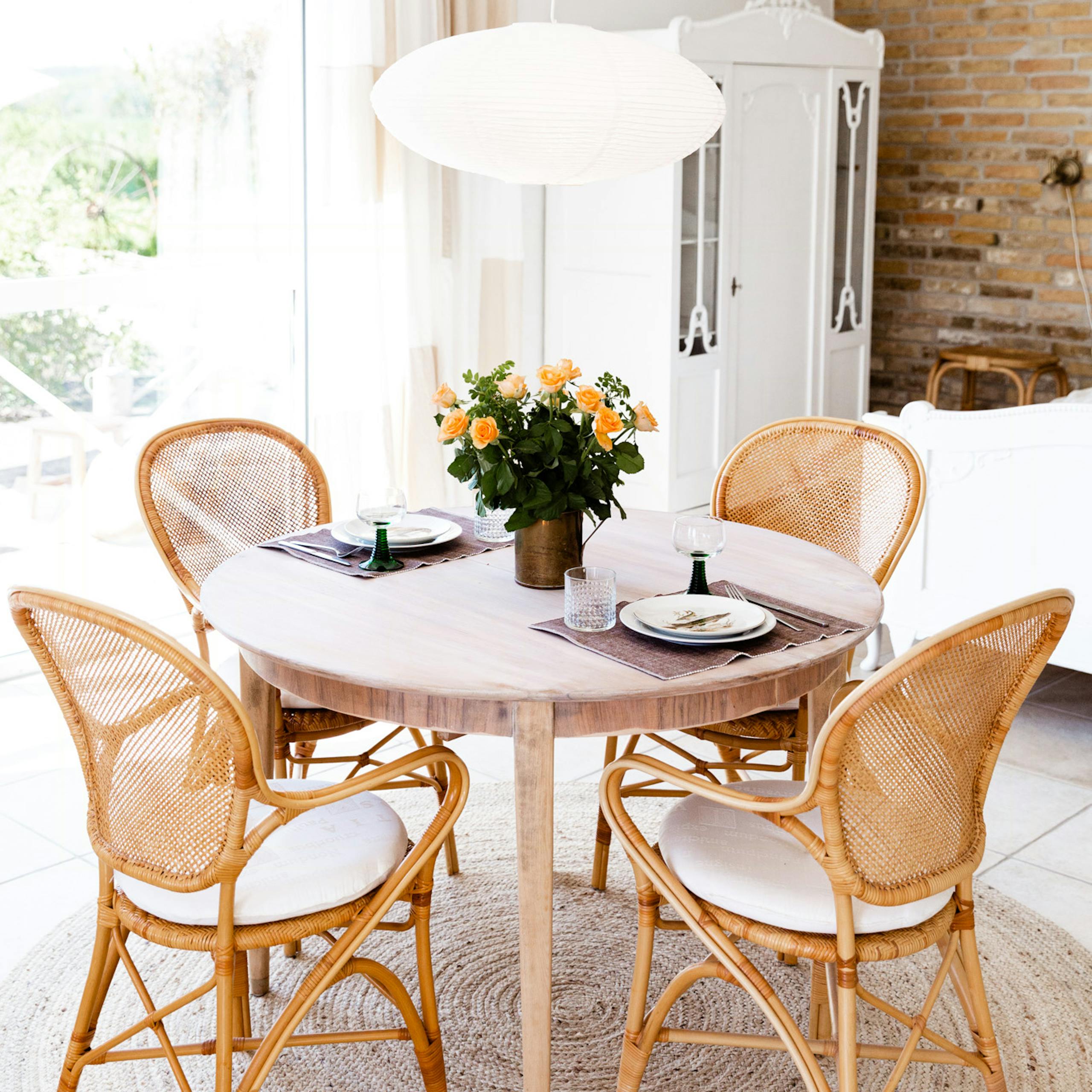
Romantic B&B at a scenic country house
- Horsens, Denmark
- 2 guests · 1 bedroom
- 2.5 km to beach
- House · 73 m²
“So the fact that it has personality, and that they are people’s personal places, means a lot to me. But I was quite excited. There are so many stories about how guests treat cabins. It’s always the negative stories you hear. So yes, I was definitely nervous and excited about it, but it exceeded all expectations, I would say,” says Mette Hassinggaard. Her cabin is located in scenic Vejle, and she is one of those who gets the most bookings on Landfolk’s platform.
“Back then, 10 years ago, it was also very exciting. Would anyone even come? But they did. I mean, actually, people came right away. And I’m so surprised at how nicely people treat the place. Really. And they also leave small gifts and notes. Now we also have many regular customers over time, and some of them have even invited us out to eat. And they just give a lot of contact out into the world. We used to have people from all over the world coming, and after we became part of Landfolk, especially from Germany, I would say. And just positive experiences, actually,” says Pernille Sørensen.
“I generally think you can tell when you’ve had good guests, and that they’ve treated the cabin as if it were their own. And then there are the very few cases where you come to the cabin after someone has been there, and almost feel like they didn’t care. And because it’s not their own, they can treat it however they please. Fortunately, there are very few of those. So I think the thing about them also being able to see that it’s someone’s cabin. It’s someone’s second home. It’s not a cabin that’s just there to be rented out week after week after week. It’s actually someone who has feelings for the cabin, for the place,” says Mette Hassinggaard.
Caught by the spirit of hosting
When asked if anything has surprised the two hosts, the same answer comes from both:
“I hadn’t expected that I would find it cozy. I really do find it cozy to do something extra for the guests before they arrive. I hadn’t imagined that. But I actually do. So it has surprised me that I have somehow been able to get caught up in it,” says Mette Hassinggaard, and Pernille Sørensen continues:
Want to experience this cabin? Book it here.

“Yes, it’s a bit the same here. I really enjoy going there and getting ready for them to arrive. Really. Pottering around and thinking, now I have to finish, because it’s almost two, so they’ll probably be here soon.”
Mette and Pernille's top 20 checklist
“I call myself the ‘housekeeper,’ and my husband is the caretaker. That way, we have good cooperation. I go around with my eagle eye and see if anything needs to be taken care of. Spiders are vacuumed down, I look around for flies anywhere, wash the floor, and of course clean everywhere. And I always put in a new toilet roll. And I always finish by picking a couple of flowers from the garden and putting them inside. Almost regardless of whether it’s winter or summer, I can find something green from the garden and put it in a vase. It makes a huge difference, I think. So that’s just a routine I’ve had,” says Pernille Sørensen.
And there are some good tips to be had from the two hosts, both when it comes to the basics, practical service, and what makes hosting an art:
The practical
1. Invest in good quality bedding
Pernille: “My most important tip is to put on really lovely bedding. That is, to make sure they sleep well. Good mattresses, good duvets, good pillows. If guests sleep well at night, they are happy. And if the bed hasn’t been good, they are often in a bad mood. And don’t choose polyester bedding. It should be cotton and cotton sheets. Night&Day or Turiform are good.”
2. Cleaning, cleaning, cleaning
Mette: “I think most of us know the feeling. There’s nothing worse than arriving at a place where you’re supposed to live and stay, cook and sleep, and then you get the feeling that it’s not clean. I think that’s one of the most important things when other people visit my cabin.”
3. Check for spiders – a cordless vacuum cleaner is your best friend
4. Stock up
Mette: “It’s of course important to remember that the bin is ready, that there’s a bag in it, that there’s a roll of toilet paper, and that the kitchen roll and spices are stocked.”
5. Check that nothing is broken
6. Get a key box
Mette: “We have a small key box, so when they arrive, they can find the key themselves and let themselves in.”
7. Assess the cabin's capacity – and the work for yourself
Pernille: “I had a sofa bed that I had to pull out when children came to visit. But I got a bit tired of constantly pulling it out and folding it up, and it caused a lot of communication between the guests and me, so now I only host two adults. Now everything is much easier, so in that way, I’ve learned a lot.”
Mette: “We also started by opening our cabin to five guests and have reduced it to four, because we noticed that there wasn’t quite the capacity for it in the cabin.”
8. Make space for your guests
Pernille: “Be careful not to fill up too many things in one place. Because you also have to consider that guests come with all their things, so there needs to be space for them. So rather furnish simply, so that there is also space for guests’ toiletries in the bathroom, because if they have to stand on the floor, it’s very annoying. So a small shelf or something else with space for toiletries. That’s really nice. It’s also easier to clean when there aren’t so many things.”
9. Place a bedspread over bare mattresses
Mette: “There’s no bedding included in our cabin, so I cover everything with a nice bedspread and some pillows, because it’s not very cozy to look at a duvet without a duvet cover just lying there.”
10. Imagine yourself arriving as a guest
Mette: “One should try to imagine arriving at the cabin as a guest. What happens when you open the door to the cabin? What are you met with? Play guest in your own cabin.”
11. Loud ticking clocks are a no-go – otherwise, guests might take them down
12. Have an outlet or extension cord by the beds
Pernille: “There must be an outlet or extension cord by people’s nightstands, so they can charge their phones. Otherwise, they do some ridiculous things to get power for their chargers.”
13. Decide whether animals are allowed in the cabin or if it should be allergy-friendly
The personal
14. Create good communication – good preparation leads to happy guests
Pernille: “I communicate a lot with my guests before they arrive – if I have the opportunity to welcome them, or if I’m not home, where the key is. And when they arrive, I go over and greet them and say hello and show them around a bit, how things work here. And I just tell them that they can just text or call me if they have any questions, so they feel safe.”
Mette: “We’ve had some guests here lately where so many unfortunate things happened while they were here. A refrigerator broke down. An oven broke down. We had super good communication, and we were down there to get things fixed, and they waited for her to defrost a refrigerator to see if she couldn’t get it to work. These are the people who also go the extra mile to ensure they have a good experience. They could just as easily be enormously disappointed and angry that things weren’t working.”
15. Make sure they know where to go
Mette: “Be absolutely sure that they are confident they know how to find the cabin.”
16. Leave a welcome letter
Mette: “What we haven’t communicated about in advance, we leave in the cabin as a small letter. Where do they find the bins, where is the nearest shop? Where do we go for one thing and where do we go for another? So all the practical things. Is the hot water tank small, or what happens if you take too long a shower? The small tips and tricks for their cabin trip. And with contact information, they can always get help if there’s anything.”
“And we also make sure that something is waiting for them, apart from the small letter that we also try. I try to make it personal. Every time someone comes, there’s a personal greeting, instead of it just being a standard letter waiting for them. But then maybe there are children, and then there’s a little something for the children. It’s a bottle of wine, fresh flowers. I think that those who come into the cabin can feel that someone has looked forward to them coming – has made an effort for them to come. I would be happy about that myself, and I think others are too.”
17. Let your guests inspire you to become a better and better host
Mette: “When questions come up that you haven’t thought about, you can add them to the list of things. Some asked, for example, where they should go, because we had written that it wasn’t good to walk near a marsh by the house. So we added some nice walks and forests to visit.”
18. Gather experiences when you are on holiday yourself
Pernille: “I have stayed in Bed & Breakfasts, hotels, holiday apartments, and so on myself. I have naturally appreciated the experience I gained from that, because I pass it on. And of course, the experience I myself have gained as a host all these years. It has just meant that there are some things that simply have to be done for it to work, and for people to feel safe.”
Mette: “I have spent most of my life going on holidays in cabins, both in Denmark and abroad. And I think I have gathered all the things that I myself have needed, or have seen other hosts and other places have shared with me.”
19. Have a guest book available
Mette: “Now we have our nice Landfolk guest book, and you get extremely happy when you come to the cabin and a cozy message is waiting. You can clearly feel it when the guests have really had a good time, and what we ourselves find nice about our little place. I think that’s incredibly cozy.”
20. Decorate with intention, and not just with things you have left over
Pernille: “I also think that one should try not to make the mistakes I have seen in many cabins. That people just put what they don’t need themselves in the cabin. And there should be a kind of common thread in the decor, I would say. That it fits the cabin’s age or surroundings. That is, you should find what makes your place unique, and highlight it. I think that’s also something guests can recognize when they arrive, and which helps create the atmosphere of a place – that you can see that an effort has been made. I think you can feel that when you arrive. And if you’re not so good at it yourself, you can always get help.”




Written by Nina Lykke
April 2023
