Back to the very first holiday homes: The story behind the old fishing villages along the North Zealand coast
Throughout history, North Zealand has been home to fishermen, artist colonies, and Denmark's very first holiday home area. We tell the story of the North Coast's fishing villages, which for over 150 years have formed the setting for Danish holiday home life and still attract us today.
The special Danish holiday home culture began when the state sold a small plantation area in North Zealand in 1886. It wasn't long before the upper class had conjured up Denmark's very first holiday home area at the fishing village of Hornbæk. Danes flocked to the holiday home area, and weekend houses sprang up along the sandy beaches of the coast, which we know today as "The Danish Riviera" – a small Danish copy of the Amalfi Coast.
Holiday home areas grew especially in the 60s and 70s, and nowhere in the world does holiday home culture occupy as much space today as in Denmark. Across the country, there are more than 200,000 holiday homes, and it is estimated that more than half of Danes have a connection to at least one holiday home. Here we tell the story of North Zealand's coastal towns, where the love for holiday home life was born. And we guide you to a couple of very special Landfolk holiday homes that let you travel back to the beginning of the seaside resorts.
The very first holiday home area in Hornbæk
When the first summer villas sprang up on the beach west of Hornbæk, only 600 inhabitants lived in the small fishing village. The sweet holiday home life was not for the fishermen, but wealthy Copenhagen families moved into the large villas to enjoy life, sea baths, and walks along the coast at sunset.
Hornbæk not only became home to the first holiday home area but is also believed to have formed the precursor to the artist colony that later became known as the Skagen Painters. In the 1870s, artists such as Carl Locher, Holger Drachmann, and P.S. Krøyer moved to the town, drawn by the harsh fishing life and the special light over the coast – which led the painters to christen the North Coast "The Golden Coast."
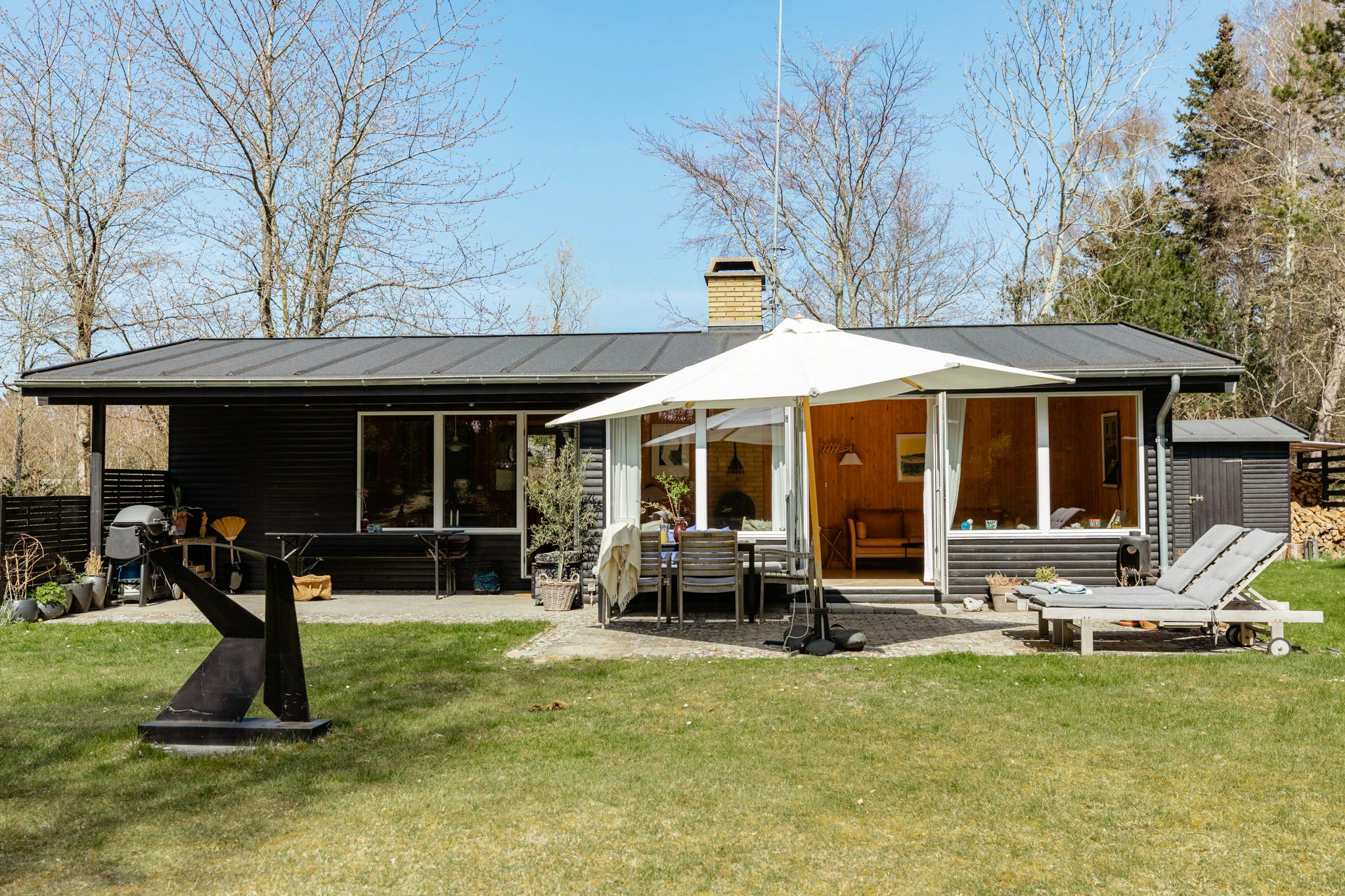
Ternehuset, not far from Hornbæk, is a special little time capsule. It's like stepping directly into childhood memories in Sophie's black wooden holiday home with its white-paned windows. The holiday home was built in the 60s and has been carefully restored.
The lively fishing town of Gilleleje
Gilleleje is home to about 7,000 inhabitants and reportedly twice as many holiday homes. Today there are probably more tourists than fishermen, but historically Gilleleje is known as a lively fishing town. The narrow streets in Gilleleje's old town are a window to the fishing village of the past with its authentic small fishing houses and Den Grønne Bænk (The Green Bench) on Havnevej, where fishermen met to chat about seafaring and auction prices.
Also get a breath of history when the veteran train steams into Gilleleje Station. Last but not least, Gilleleje is known for the great rescue operation in 1943, where Jews were sailed to safety in Sweden across the Øresund in the dead of night. Visit Skibshallerne, which tells the story of both fishing life and the escape in 1943.
Rasmus' Gottebo just outside Gilleleje lets you travel back in time. The holiday home was built in 1956, and design icons from the 60s send you on retro waves back to the 50s and 60s. Enjoy the idyllic garden with tall trees and rhododendron bushes and the newly built annex with a sauna.
Fishing village and Ice Age heritage in Rågeleje
As with the other seaside resorts on the North Coast, Rågeleje originated from fishing. But as fishing became more efficient over time, fishermen had to pack up their tents and move to Gilleleje, and summer residents took over the town. Rågeleje reportedly had its heyday as a tourist town in the 1960s, when, among other things, a wider road was built and Restaurant Søstjernen opened. You can still visit the restaurant, which serves delicious food in a historic setting.
If you go a little outside Rågeleje, there are several historical landscapes to find. South of Rågeleje lie Maglehøjene, the beautiful cluster of burial mounds from the Bronze Age. A little further southwest of the town, you go even further back in time with the natural gem Heatherhill, whose hills and valleys are a remnant of the last Ice Age. Heatherhill was named after the wealthy English Vincent family, who had their summer residence in the heather hills. During World War II, the villa was occupied and vandalized by the Germans, and today the house's curved stone staircase is the only remnant of the family's beautiful Heather Hill holiday home.
From sand drift struggle to holiday home paradise
Before summer residents, seaside hotels, and holiday home guests truly moved into Tisvildeleje, the seaside town was also a small fishing village. Since then, holiday homes and the characteristic colored bathhouses have sprung up among the fishing houses, and the last fishermen left the town in 1977. Today, Tisvildeleje is best known as a holiday home paradise, but the town also tells the story of centuries of struggle against sand drifts that threatened to lay the area waste.
Near Tisvildeleje, you will find the village of Torup, which was buried under a meter-thick layer of sand. In the 1800s, the trees that are known today as Tisvilde Hegn were planted. The fence was to protect Tisvildeleje from suffering the same fate and today envelops the area in a blanket of green. Closest to the beach is Troldeskoven (the Troll Forest) with its 200-year-old pine trees, which wind and pine shoot moths have caused to curl up into gnarled, fairytale formations.
Right on the border of Tisvilde Hegn lies the thatched Artist's House, built in the early 1900s. Here you can lose yourself in the house's whimsical details and the painter's original artworks. Enjoy the nature that surrounds the house, and greet the beavers when you take evening walks by the property's own lake.
The fishing village named after the industrial magnate's wife
Liseleje exudes seaside hotel atmosphere with its long white sandy beach, low-ceilinged half-timbered houses, and hollyhocks. The fishing village was founded in the midst of shifting sands by industrialist J.F. Classen and is reportedly named after his wife, who was called Lise. At that time, the only four fishing families in the town were to supply fish to Classen, who produced gunpowder and cannonballs in Frederiksværk. But once good transport links to Liseleje were established, the beach became a magnet for summer guests from the big city. And the popularity of the seaside town has only increased since then.
North Zealand's coastal towns offer morning swims in the Kattegat, walks along the water, and forest trips in the plantations – just a short train ride from Copenhagen. Read our best tips for a weekend trip to the North Coast.
Explore our collection of historic homes that tell the story of the lives lived before.

Written by Sara Maarup Thomsen
June 2022
