Landfolk x Danish Energy Agency: The 8 Best Tips for Reducing Energy Consumption on Your Summer House Trip

In the midst of an energy crisis, it’s nice to feel like you’re doing your part—even when you’re at your summer house. Line Nørmark, an energy advisor at the Danish Energy Agency, shares 8 tips on where it makes the biggest difference to practice good energy-saving habits when you’re at your summer house.
Energy advisor Line Nørmark talks about this new sense of community. She is an advisor at SparEnergi, an initiative by the Danish Energy Agency designed to help and advise Danes on how to save energy, and we spoke with her about the best ways to do so in a summer house.
Because even if you’re vacationing in a summer home you don’t own, it can feel good to know that you’re being mindful and doing your part wherever you can, especially as we’re in the midst of an energy crisis.
At Landfolk, we believe that the vast majority of us want to be responsible when we’re guests in a vacation home—and we also know that a full 95 percent of Landfolk hosts have had a positive experience with them and would love to have them visit again. Still, many of us may not be entirely sure where to focus our efforts when it comes to using energy responsibly in the vacation home where we’re staying. That’s why we’ve asked Line Nørmark to highlight the 6 energy-saving tips that will have the greatest impact if you follow them.
1. Bring Your Good Habits on Vacation
It can be hard to know where to focus your efforts to save energy. What can you do while vacationing in a vacation home that will have the greatest impact?
“When you arrive at the vacation home, remember to do everything you do at home to save on electricity and heating. For example, it’s a good habit to turn off anything you’re not using. We actually forgot about that a bit when we switched to LED bulbs. We didn’t think it cost that much, so we let those good habits slip. But it still makes a difference.”
There are some things that keep using electricity even when we’re not using them, and that’s a good place to develop some good habits, says Line Nørmark:
“Something like an iPhone charger left plugged in doesn’t use any power, but it can be really hard to tell what uses power and what doesn’t. That’s why it’s a really good habit in general to remember to turn off the things you’re not using and unplug them from the outlet.”
> We actually forgot about that a bit when we switched to LED bulbs. We didn’t think it cost that much, so we forgot those good habits. But it still makes a difference.
2. Use the heat pump, if you have one
If you want to save on heating, it’s best to use the air-to-air heat pump—if your vacation home has one—and turn off any electric radiators in the rooms that the heat pump can heat anyway. Air-to-air heat pumps are often located in the living room or kitchen and are the units that distribute warm air throughout the space.
“Some people might also be unsure of what an air-to-air heat pump is, so they might just turn it off and then use the electric radiators instead, without realizing that this is actually a really bad idea.”
“And there might also be savings to be had by using a wood-burning stove, if you can get some inexpensive firewood,” says Line Nørmark.


3. Don’t mess with the settings: “You’ll just have to wait”
One of the very specific pieces of advice Line Nørmark offers is to pay attention to the heat sources in the vacation home where you’re staying.
“Don’t tamper with the systems or the hot-water tank. You won’t get hot water any faster by turning up the heat. And similarly, you shouldn’t crank it up way too high if you need more heat, because that won’t make it come any faster. You should set the temperature to what you want, and then you’ll just have to wait.”
4. Don’t keep the heat too high
You’ll save 5 percent on heating costs every time you turn the thermostat down by one degree.
Set the thermostats to the same temperature in all rooms and keep the temperature at least 18 °C to prevent mold. It’s also a good idea to turn down the heat in bedrooms or outer rooms that aren’t in use all day and keep the doors to those rooms closed, says Line Nørmark.
5. If you do laundry at your summer home, do it in an energy-efficient way
“Many loads of laundry can be washed at 20 degrees. So every time you do laundry, consider whether you can lower the temperature. It’s also a good idea to air-dry clothes outside. And remember to fill up your appliances—the washing machine, dryer, and dishwasher—and turn down the temperature.”
If I set my washing machine or dishwasher to run at 4 a.m.—because my new app has told me that’s the cheapest time—but the machine stays in standby mode until then, am I still saving energy?
“Yes, it uses much more energy when it’s running. But remember to use the eco-programs, even if they take three or four hours. It’s just like when we drive a car—we shouldn’t drive too fast either, because that uses way too much energy—even if it gets us there faster. And we actually see a lot of people who want to use those turbo programs because they think, ‘That can’t be right.’ But there’s a reason it’s called an eco-program.”
> We actually see a lot of people who want to use those turbo programs because they think, ‘That can’t be right.’ But there’s a reason it’s called an eco-program.
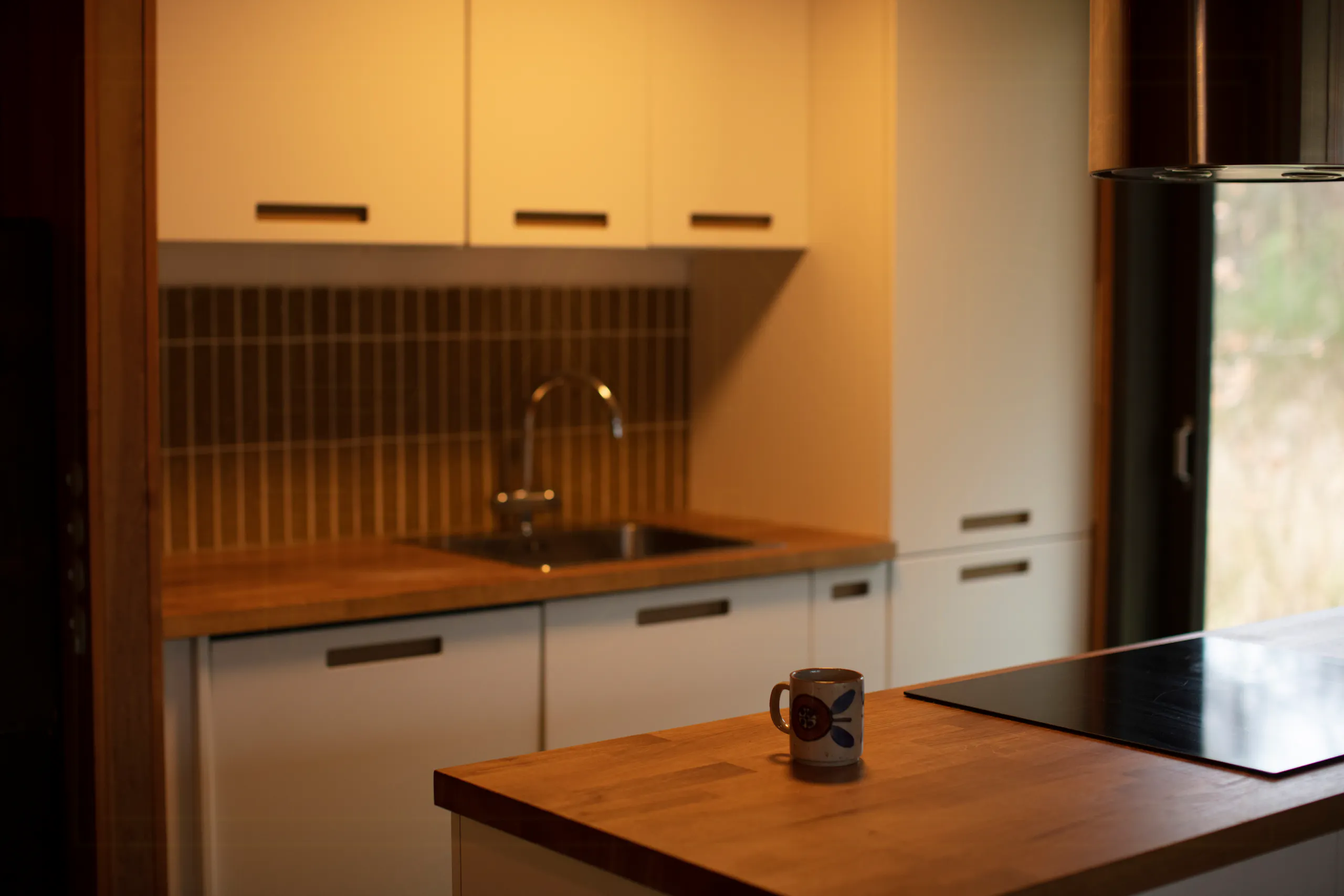
6. Adopt Good Habits in the Kitchen
Many vacation homes today are now equipped with both a dishwasher and a washing machine. And that’s one of the places where we use a lot of electricity, explains Line Nørmark.
“It can be something as simple as using an electric kettle to boil water instead of a pot, if you have one. If you need to boil something, use as little water as possible and remember to put a lid on it. Don’t toast your bread in the oven—use a toaster.”
7. Keep the cold out
Air out the room for 5 minutes twice a day, but otherwise make sure to keep windows and doors closed.
“This includes rooms you’re not using, so that a lot of heat doesn’t escape into outer rooms that aren’t in use anyway, or where you might just be sleeping.”
You can even open the curtains when the sun is shining to let the heat in.
8. Use electricity responsibly
“Even if you don’t immediately benefit financially yourself, it’s still a good idea to keep an eye on electricity prices. We [the Danish Energy Agency, ed.] still want people to monitor electricity prices and try to shift their consumption to the times when it’s cheapest. That’s when we have the most renewable energy in our grid—or when demand is lowest and capacity is therefore highest. The more we can shift consumption to the off-peak hours, the more we can lower the price of electricity, and the better it is for the common good.”
> The more we can shift consumption to the off-peak hours, the more we can lower the price of electricity, and the better it is for the common good
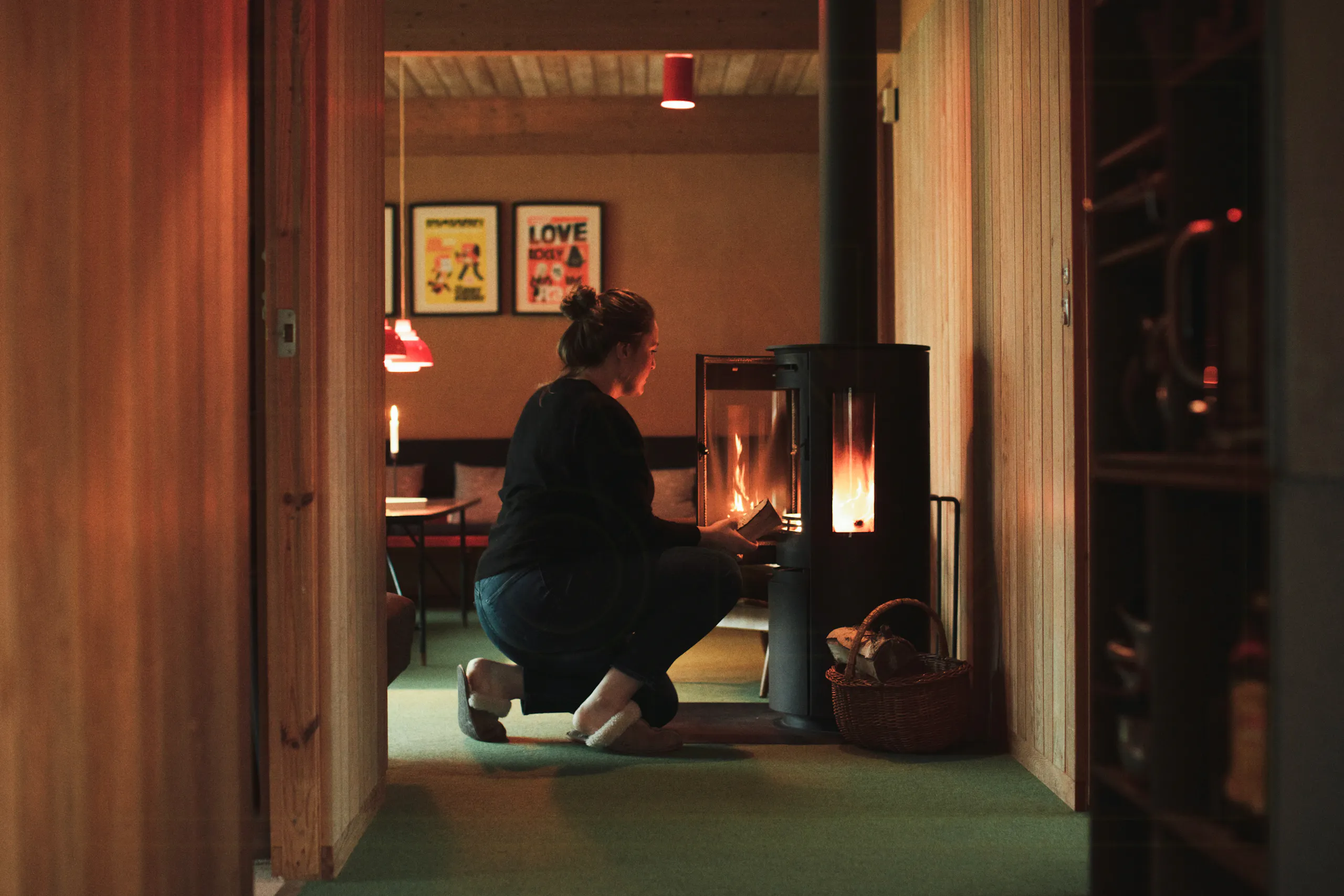
And our top tip: Bring a pair of cozy slippers and light a fire in the wood stove during these cold months. That way, it’s always cozy, even if your feet might get a little chilly in, say, a cozy ’70s-style summer house.



Written by Nina Lykke
November 2022
