Abandoned summer house gets a new lease on life after 25 years

We drove 20 minutes north of Holbæk to meet Katrine and Morten at their 1970s summer house near Lammefjorden. It’s a time capsule that, thanks to its new owners’ knack for stripping it down to the bare essentials, has been gently transformed into a true gem—perfect for a weekend of peace and reflection.
Portrait Series: Meet one of our vacation home hosts, handpicked to be part of Landfolk.
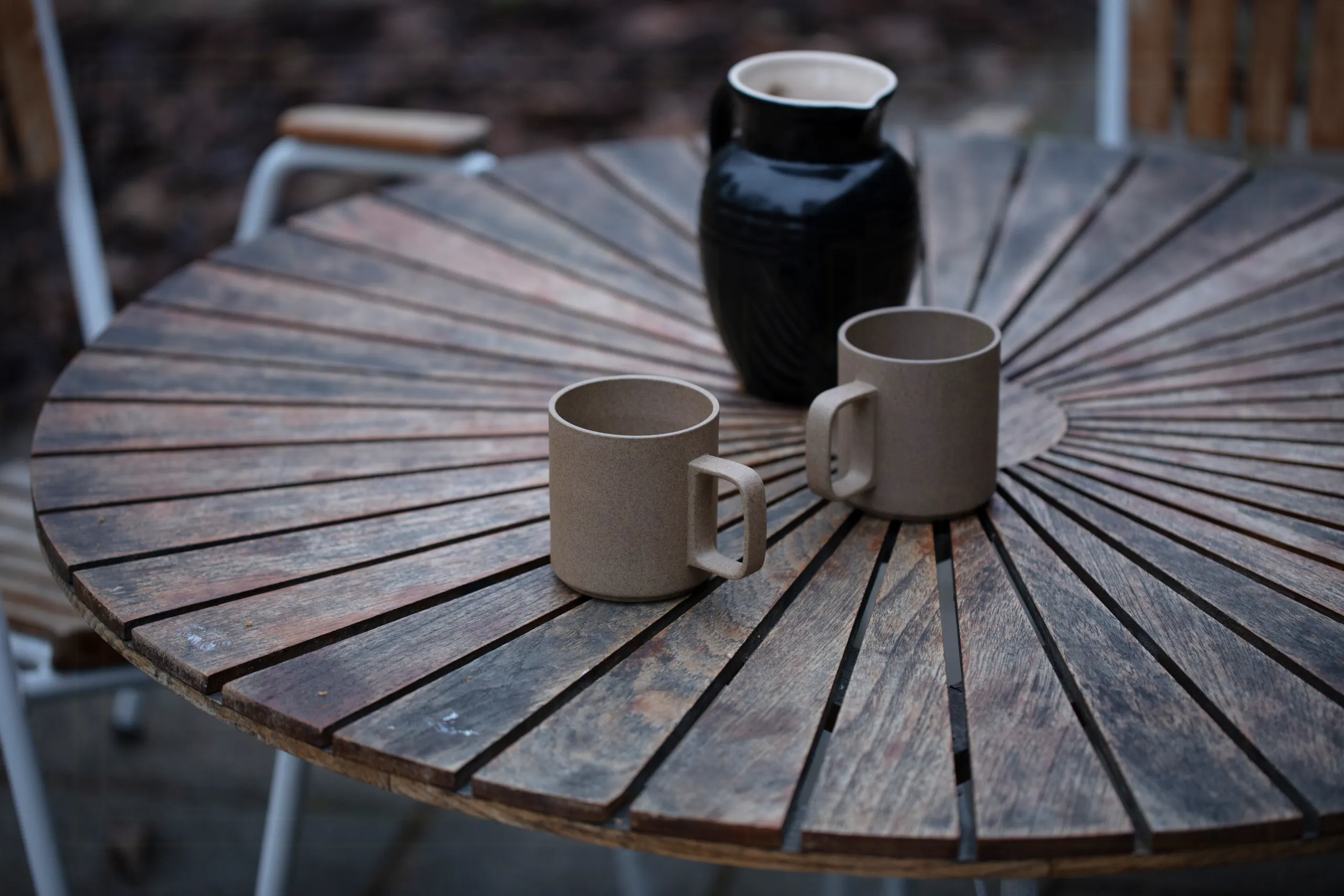
We’re treated to some delicious coffee and sit outside, where everyone can join in the conversation about their vacation home life here in To-Bjerg.
What did the house look like when you first took it over?
Katrine: “We took it over with all the furnishings, and there was everything from old garden chairs to a stuffed fox on the wall. The kids played with it for a while, until it disappeared one day—mysteriously…,” says Katrine with a smile. “The real estate agent said we could probably go a long way with a coat of white paint—but that wasn’t the direction we wanted to take with the house at all. It was actually a real mess in here. It had stood abandoned for 25 years because one of the original owners died suddenly, and the rest of the family couldn’t really handle the work involved with the house. It was a real shame, because they were supposed to spend their retirement up here. The good thing is that they actually didn’t change much about the house. It’s pretty much just as it was planned in 1969. It’s called the Mallorca model! Built in 1972.”
Have you kept anything from back then?
Morten: “We’ve kept the photos from the listing—it’s pretty funny to look at them now. You can really see the difference between before and after. The only other thing we’ve kept is the original dining chairs. They’re old FDB Møbler chairs that we’ve painted black, and they look really nice here in the living room. They go well with the rest of the decor, and it’s cool to have something from the house’s original owners.”
> It’s about how we feel that this approach helps us get to the core of what we need, and then there’s something else that can take its place instead of things we have to deal with—namely, spending time together.


What have you done to put your personal touch on the house, and what are your thoughts on interior design?
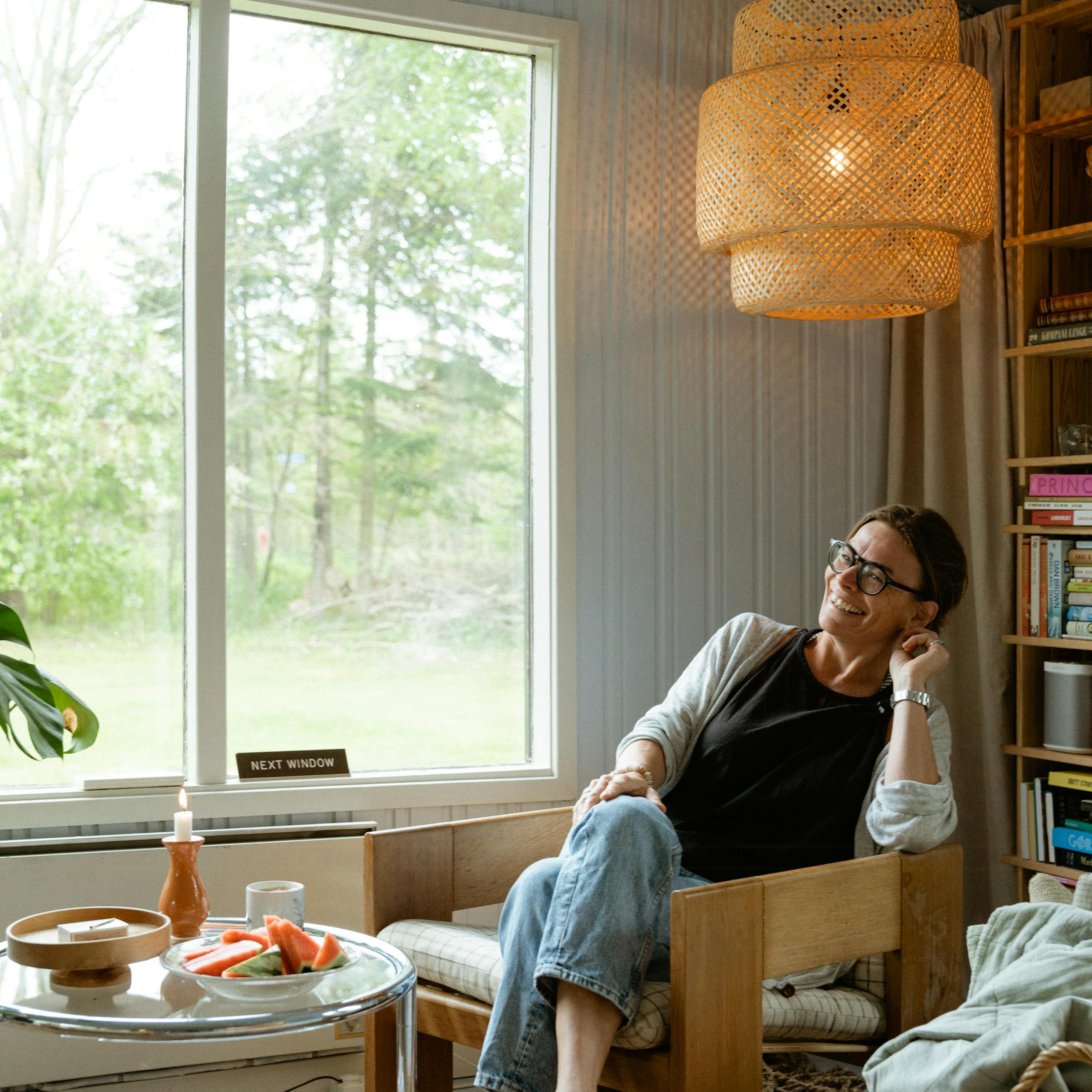
Katrine: “The decor is sparse and simple. If there’s a painting hanging on a wall that doesn’t fit in well here—it goes back down. It shouldn’t just be hanging there for the sake of hanging there—I’d rather have a bare wall.”
Morten: “There’s as little as possible here, in one way or another.”
Katrine: “It’s about how we feel that this way, we get to the core of what we need, and then there’s something else that can take up the space instead of things we have to deal with—namely, spending time together.”
Morten: “You should be able to tidy up in 5 minutes! We can’t always stick to that—but that’s the goal.”
Katrine: “Yes. We’ve gotten rid of so many things because this is where we come when we don’t want any more distractions. We need to detox our eyes and minds. It should ideally be as simple as possible. It shouldn’t be fancy or expensive either. It should be something you can actually use.”
Morten: “But we’ve thought through every single thing!”
Katrine: “Yes, we’ve thought through every single item together. And that includes everything from the type of paint, brushstrokes, lamps, and paintings. We cleared everything out, and then we brought each item back in one at a time. We’d rather go without a sofa than not have the right one. So we just didn’t have a sofa.”

How did your interest in art turn into an Instagram account, and how does that tie in with the summer house?
Katrine: “Some people play soccer; we sell art, as we usually say! Alongside our jobs, we spend our free time rescuing art and selling it on Instagram. And some of that art has come up here to stay. We test whether the pieces can find a home here; otherwise, they’re sold on. We think it’s fun that everyone—including students—can afford a real lithograph from the ’70s. It’s not like we’re making a fortune, but whatever we earn goes toward the summer house. Now we’ve also gotten our 17-year-old daughter involved, so she can earn a little pocket money.”
> Being able to welcome people into this place—and seeing them find joy in a place that’s been abandoned for so long—is incredibly satisfying.

Your summer house stood empty for years. Now it’s often used by you yourselves, but also by others. Why is that?
Katrine: “I find it incredibly satisfying to buy a summer house that’s been empty and unused for so many years—and then spruce it up so other people can use it. For example, some people are going to spend Christmas here this year. I find that so touching. That we can welcome people into this place, and they can find joy in a place that’s been abandoned for so long. There’s a huge sense of satisfaction in that.”
Morten: “We also like staying in other people’s homes when we’re on vacation abroad. And even if you’re only there for a couple of days to see the city, it’s a joy to stay in a place that means something to someone.”
Katrine: “We could, of course, keep it to ourselves. Every now and then, someone asks us how we can stand having other people sleep in our bedding. I think it’s fantastic that someone is using it! People take such good care of it. And we’ve had so much positive correspondence with the people who use the vacation home.”



Written by Camilla Swartz Primdahl
February 2021
