Going to the studio and working with clay while drinking wine and soda is the ultimate way to unwind

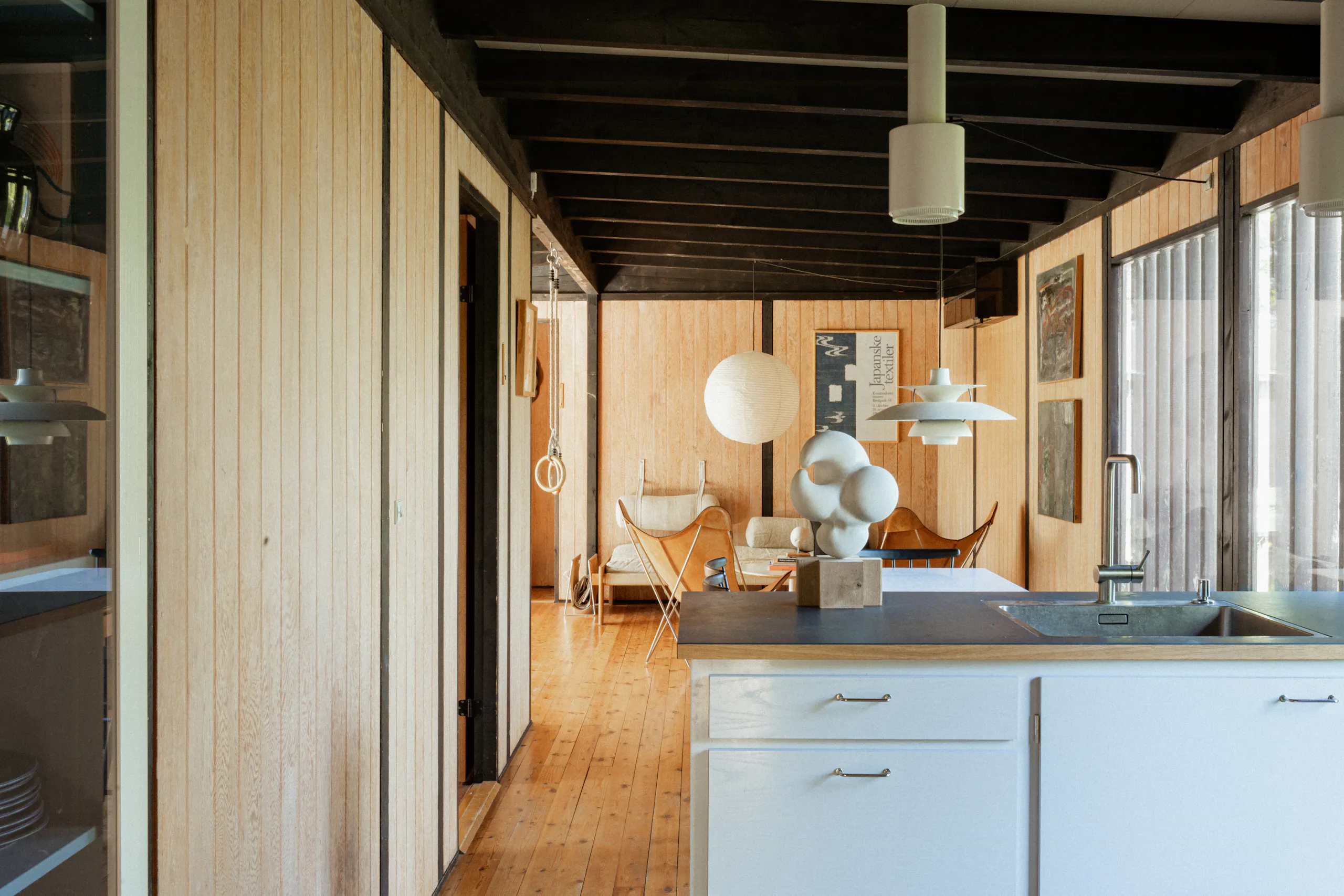
Morten, 50, and Katrine, 40—both trained theologians—live in Morten’s parsonage on Sluseholmen in Sydhavn with their three children, Hannah, Erik, and Hans. When they have the chance, however, they often head to their summer house in Kisserup, which they bought a few years ago to have a place where they could find peace and space for reflection. Katrine has since traded her job as a pastor for a life as an artist and ceramicist, and the black wooden house by Lammefjorden bears the mark of this new path. Here, she talks about rituals, clay, and a quiet salt marsh.
How did you come across the house?
“We didn’t have any money when we started looking for a summer house in late 2016, so I sat down and searched for the cheapest summer houses within an hour’s drive of our home. After a month of searching, we came across this place, which we went out to see and really wanted to buy. We had to switch banks and sell a lot of furniture to secure a loan, but we finally succeeded. The house had been abandoned for 25 years when we bought it, so of course it was incredibly run-down. That actually suited us just fine, though, because there’s something incredibly satisfying about buying something and fixing it up yourself.”


What’s the first thing you do when you arrive?
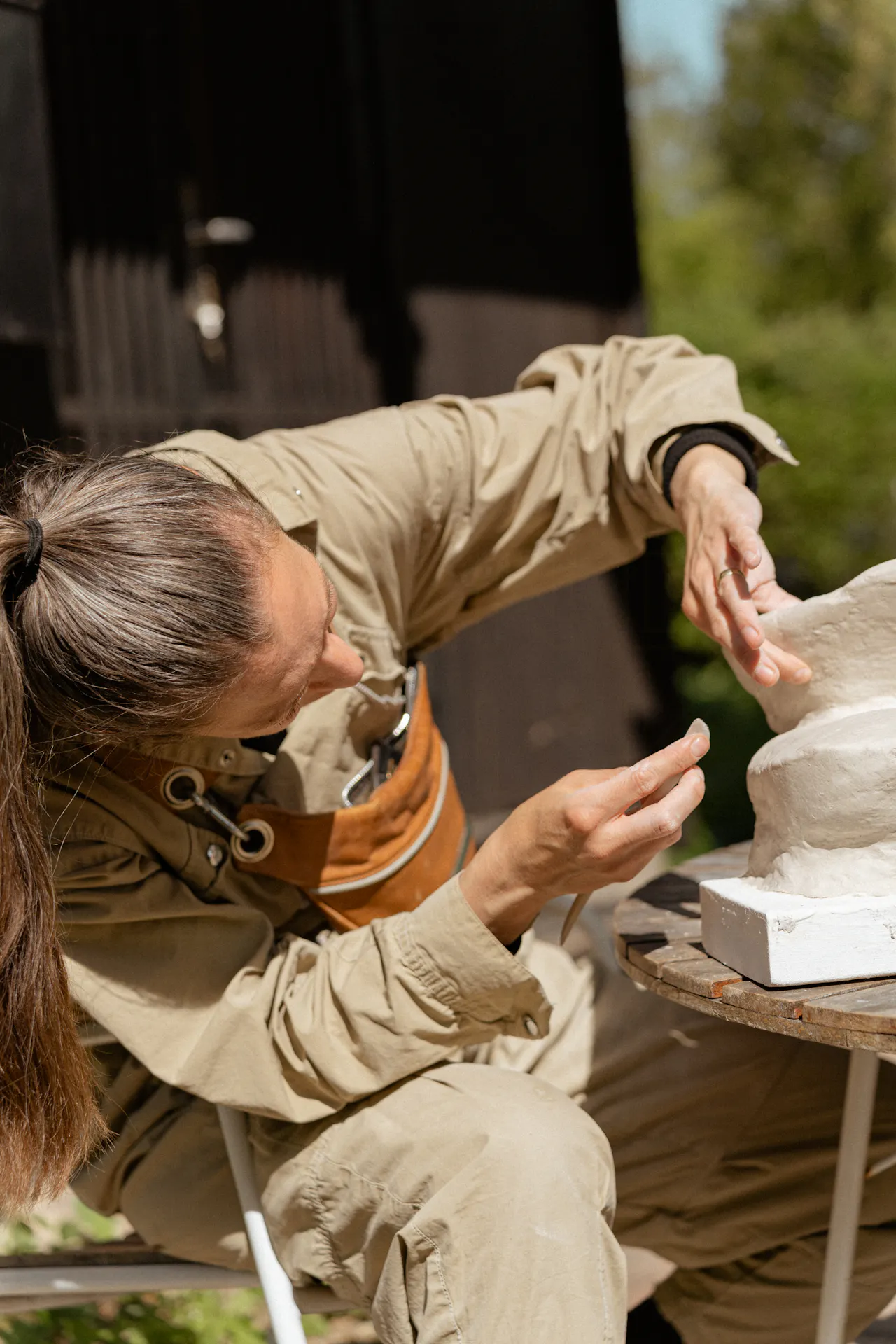
“Calming the kids down and unpacking, ha ha. But from there, we all get to work very quickly out in the workshop, where four-year-old Hans sits building strange monsters by hand, Morten throws clay on the wheel, while Erik and I do hand-building. Then we sit out there drinking wine and soda and just enjoying ourselves. It’s the ultimate way to unwind.”
What are your rituals at the summer house?
“It’s all about bonfires and wine, and we’re always at the swimming dock to jump into the water—both summer and winter. That’s really our thing. In general, we just get plenty of fresh air, and I don’t know why, but the air out here is different than in the city. You get tired in a completely different way, which is fine, because the summer house is also the only place where we can sleep in with the kids, which we really enjoy. There’s a wonderful sense of peace here.”
What do you allow yourselves to do at the summer house that you would never do in your everyday life?
“We pretty much always do whatever suits us. I guess it’s an occupational hazard. When you work as a pastor, you learn that we only have a limited amount of time to live, and you have to use it wisely. We just enjoy each day. And we work with clay more than we usually do at home, because we have the time for it.
What has surprised you most about owning a summer house?
“That I was able to quit my job, which I really wanted to do. The rental income covers our fixed expenses, so in that sense, we’re not there that much right now. It’s mostly on weekdays, if we can fit it in. We never imagined that the summer house could ‘save’ me from a grueling job in that way when we bought it, but we’re very grateful for it.”


What’s the next thing you’d like to do at your summer house?
“We’d like to try raku firing—throwing clay into an open fire. We already have a ceramic kiln in the workshop, but the raku firing process is just so wild. Standing there with tongs, putting things into the fire and then into cold water—it’s a bit of a dream. Guests who rent our house are always welcome to use the workshop and the potter’s wheel, and we always provide clay free of charge. I run the business @firepaperrun, which Morten is also a part of, where I create art, ceramics, and workshops. We also plan to host various retreats at the summer house where people can come up and make ceramics.”


Written by Ditte Nylander
July 2022
