Mushroom hunting, crab fishing, and quality time for the whole family

One afternoon in August, Katrina invited the entire extended family to the summer house to forage, gather, and cook together over a campfire.
Would you like to start by telling us a little about why you organized a foraging trip at your vacation home?
We love getting together with our family and friends at the vacation home, and we really enjoy cooking over a campfire and using a Trangia stove. So being able to go out and find the ingredients for our meals in the nature around us and share that experience together was a no-brainer and really cool. The vacation home was the perfect setting, since there’s so much nature to forage in right nearby. And it’s also just much easier because we have an outdoor kitchen and a lovely fire pit.
We also took a trip to Norsminde, which is right nearby, because it’s a fantastic place to catch crabs. My uncle is a foraging expert, and he’s from the local area, so he was great at showing us the right places to look—since you can forage for different things in specific areas.
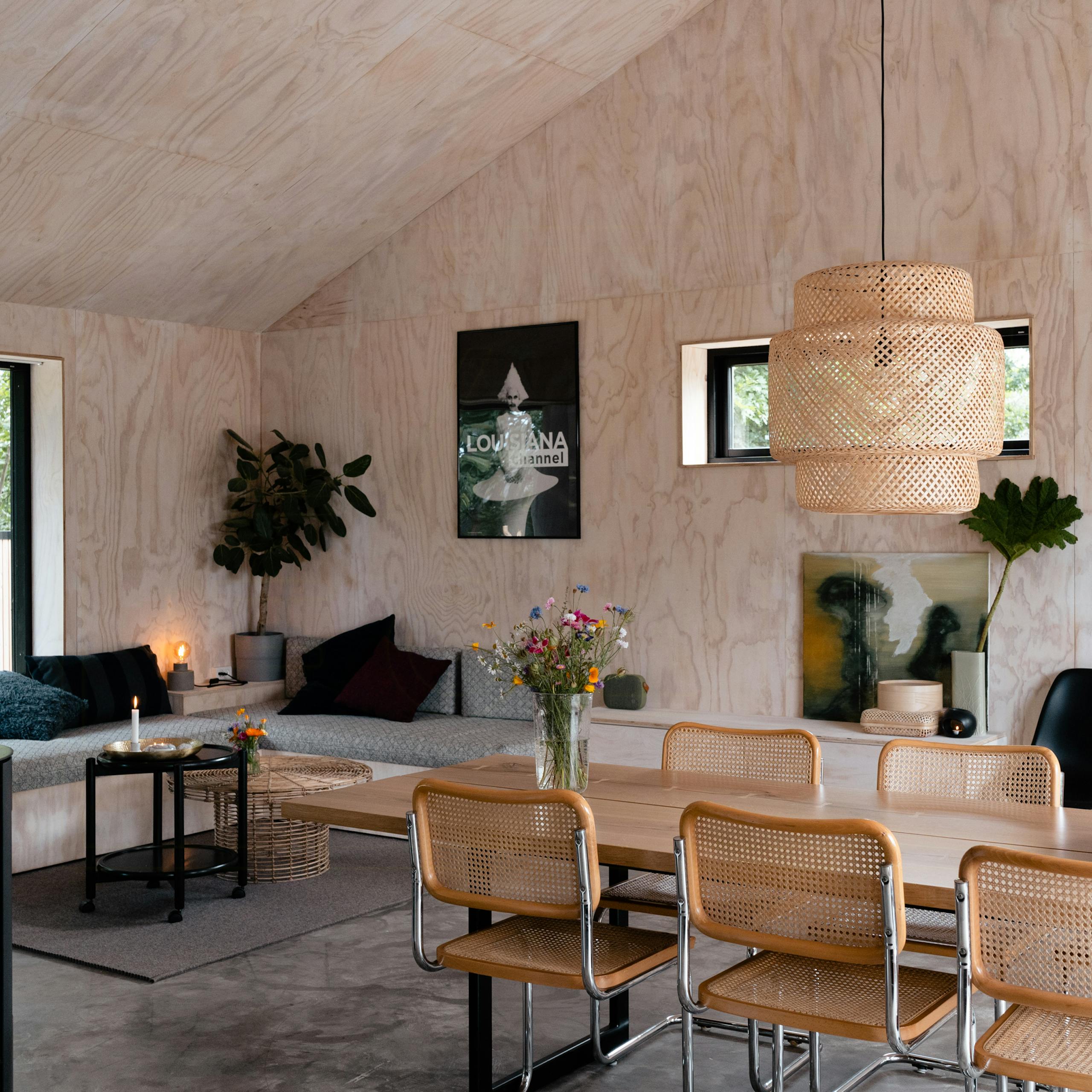
Enjoy the morning with a dip in the sea
- Saksild Strand, Denmark
- 7 guests · 3 bedrooms
- 330 m to beach
- House · 96 m²
Have you ever tried foraging before?
We’ve probably always been interested in it, but we’ve been a bit worried about gathering things ourselves in nature—especially mushrooms; we haven’t dared to venture into that territory. My uncle, Svend, runs a company called Strandhøst, so we asked him to come and guide us through it. He’s a nature guide, so he knows a lot about things like finding mushrooms, gathering oysters, and where to find the best ones.


How did you go about it? Where do you even start?
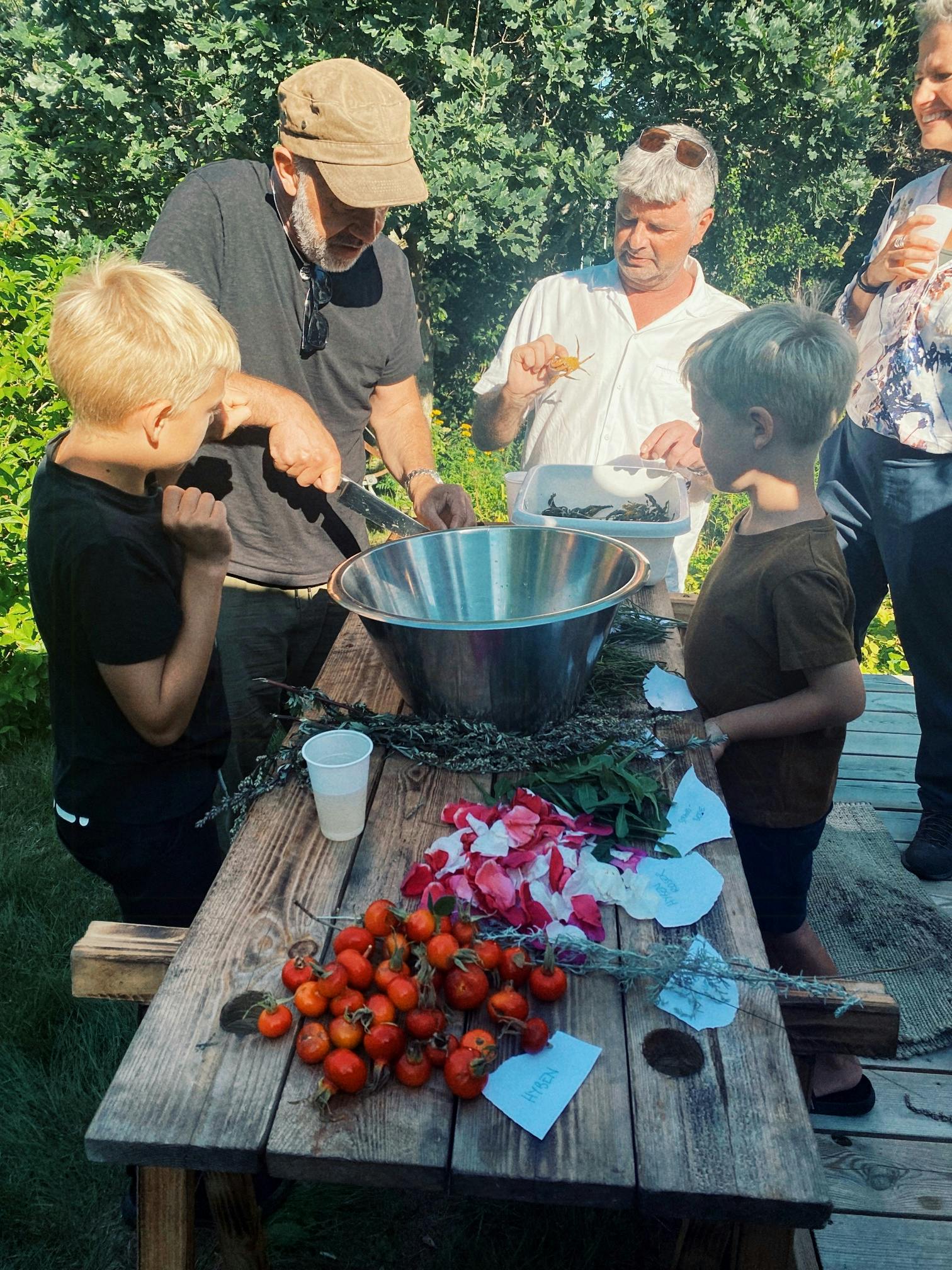
We’d teamed up with my uncle, and he was the one who made the plan. We’d gathered about 15 adults and children, and then we met at 2:00 p.m. to have a cup of coffee, eat some cake, and get introduced to the world of foraging. We could easily have spent a whole day on it, but we cut it short for the kids’ sake.
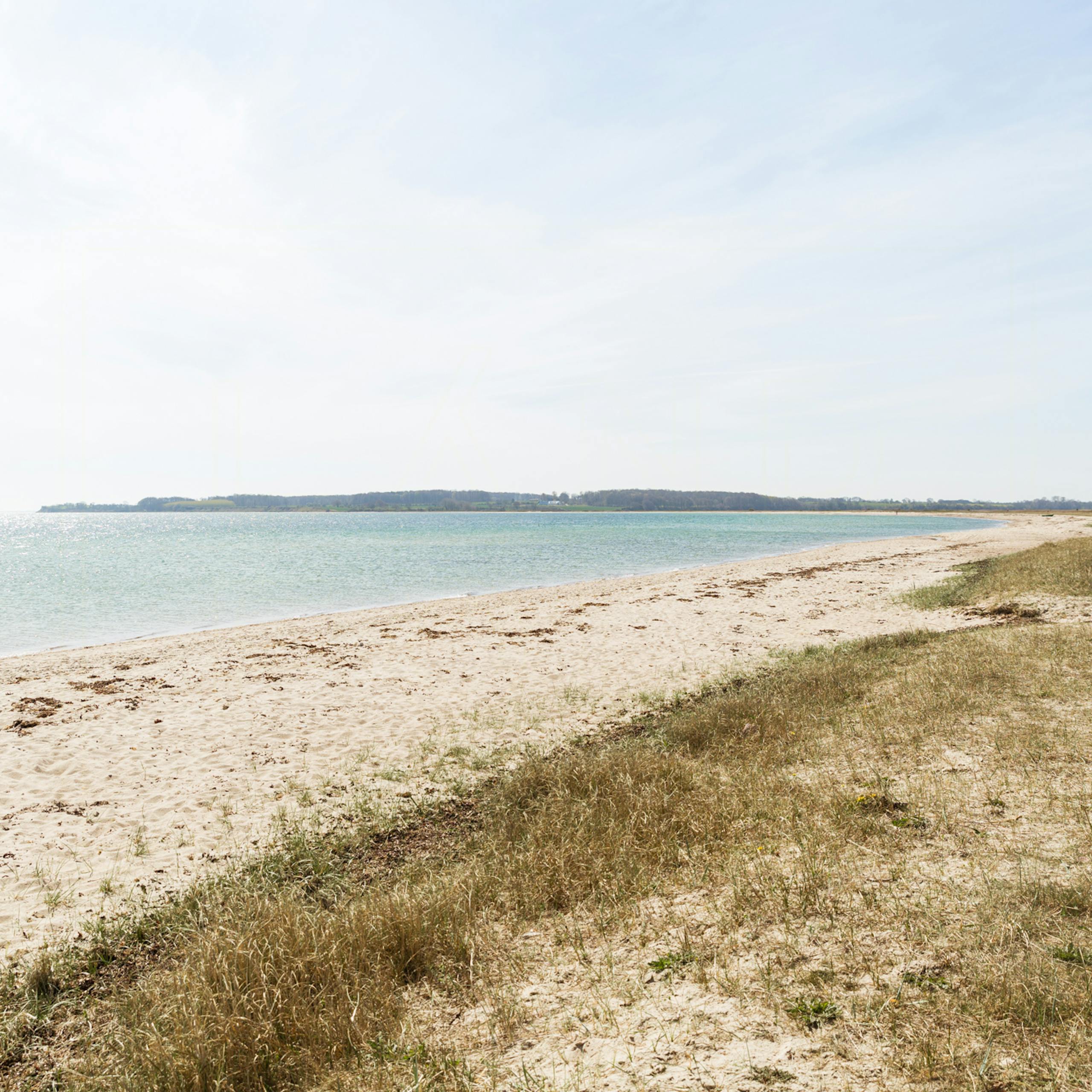
Svend explained what kinds of things we could forage at this time of year, what to avoid, and what we’d end up bringing home. He knows the local area really well, so we started near the summer house by foraging on the beach. We found what we needed together, talked about it, and tasted the various beach herbs, and when we were ready to look for crabs, we headed to Norsminde. It’s much easier to catch crabs there—and that’s the kind of tip you get when you’re on a guided tour with an expert.
What did you forage?
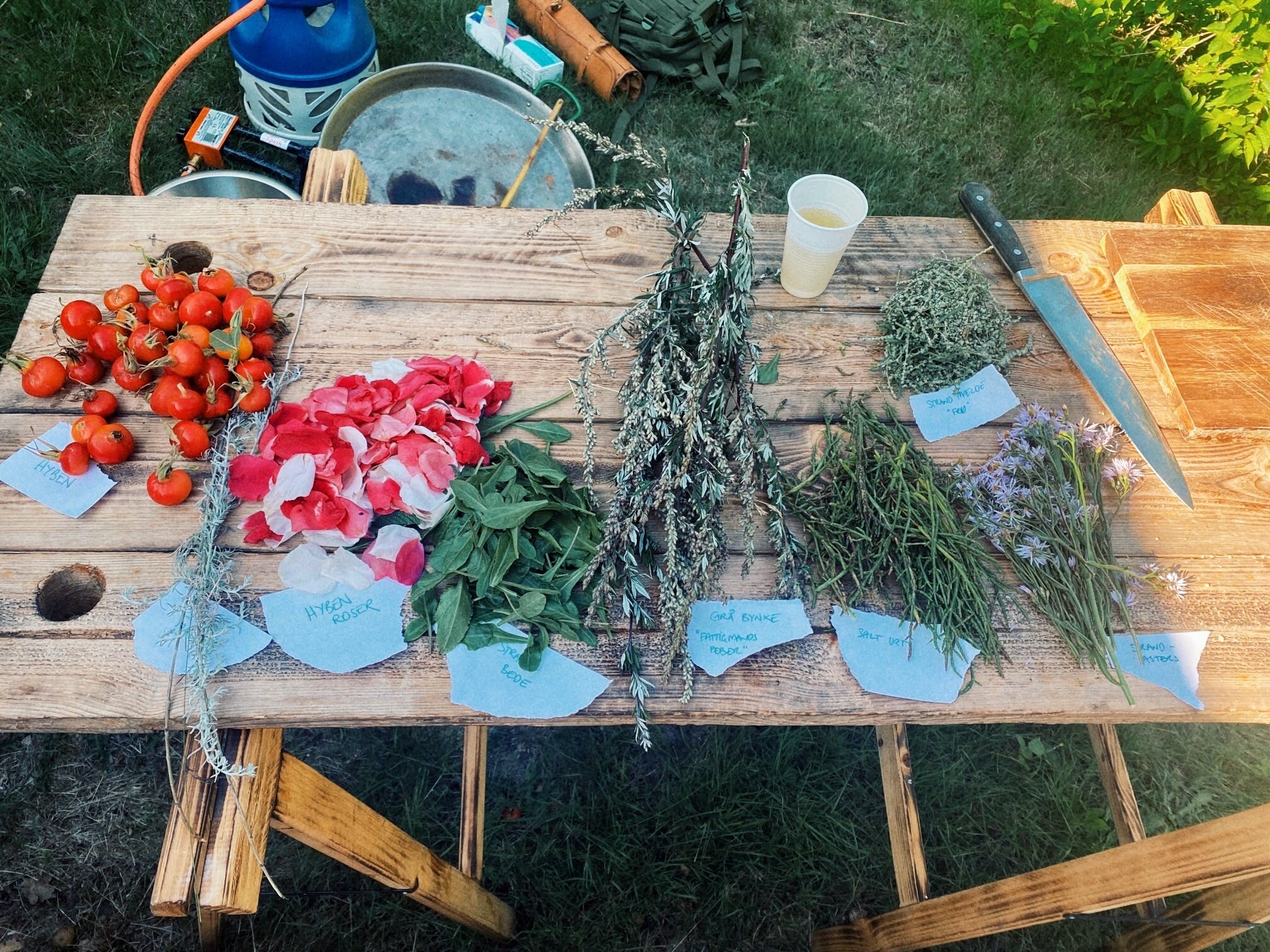
We found both rose hips and rosehip leaves. We found a lot of things on the beach—sea fennel, for example. They don’t taste all that great right now—they’re supposed to have a slightly cucumber-like flavor, but they’re better and less bitter in the spring. We saw them and tasted them, and then Svend explained that if you can find some that have grown in the shelter of a slope without too much sun, you can find some that are good at this time of year. The ones growing where it’s fully exposed to the wind and sun—well, those are too bitter.
We also found sea purslane, which tasted really good. It was one of the flavorings we used in our meal later on. We also brought sea rocket and sea purslane back to our summer house.
Did you find any plants that you didn’t pick and bring home?
We saw lots of plants, and Svend explained that this one tastes good in the spring, and it looks like this, and you should eat this part of it. It was absolutely wonderful, because that means you can go foraging almost all year round. There are only a few months when you can’t forage, but otherwise you can always find something in nature—it’s not just an autumn thing. You can find different plants at different times of year, and oysters, for example, can be gathered in the months ending in “r”—though with the exception of September, which apparently has become too warm a month now. You can do that during the months when you can’t forage for all sorts of other things.



What did you make with all the exciting things you found?
We made crab bisque over a campfire as an appetizer using the crabs. The herbs were used to add flavor and as garnish for the meal. For the main course, we had a huge paella with all kinds of delicious ingredients. Svend brought a huge pan to cook it in, so it was easy.
What did the kids think about eating something they’d found and caught themselves?
The kids love catching crabs—they can spend hours doing it. They thought it was super fun that they also got to help make soup and a meal out of what they caught. I’d thought it might be a problem getting them to eat what they’d caught, but it went just fine. Svend also explained to the kids how to crack the crabs open so they die right away. And seeing the crabs change color when they were cooked was really fun for them to experience, too. Most of the kids ended up cracking open a crab themselves. So they all helped bring food from nature to the table.






Written by Camilla Wegener
September 2021
